City of Farmington Prepares for Severe Weather Threat
Thunderstorms expected, capable of large hail, damaging wind gusts, and tornadoes.
FOR IMMEDIATE RELEASE:
City of Farmington Prepares for Severe Weather Threat
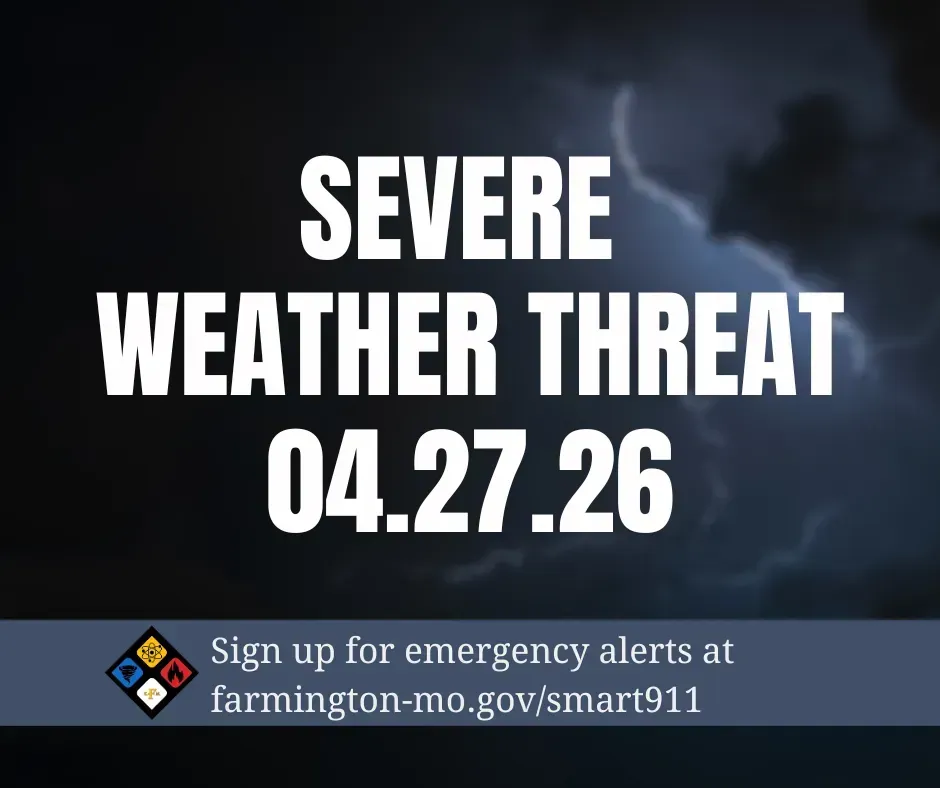
Farmington, Missouri (April 27, 2026) – A risk of severe weather is in the forecast for the Farmington area on Monday, April 27, 2026. Periods of thunderstorms are expected through the day into this evening. Thunderstorms this afternoon and evening will be capable of large hail, damaging wind gusts, and tornadoes.
Residents who do not have adequate shelter during a tornado warning or Tier III thunderstorm warning may use the following locations:
• FEMA Shelter at Truman Learning Center (209 W College at 3:30pm)
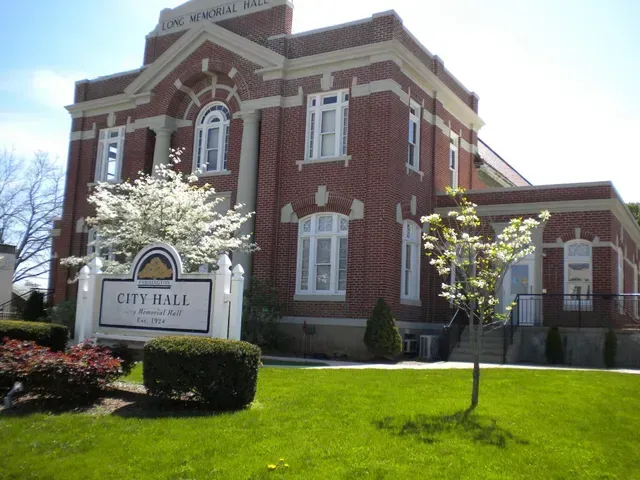
• Farmington City Hall (110 W Columbia St between 8:00am and 4:30pm)
• Farmington Police Station (310 Ste Genevieve Ave, 24/7)
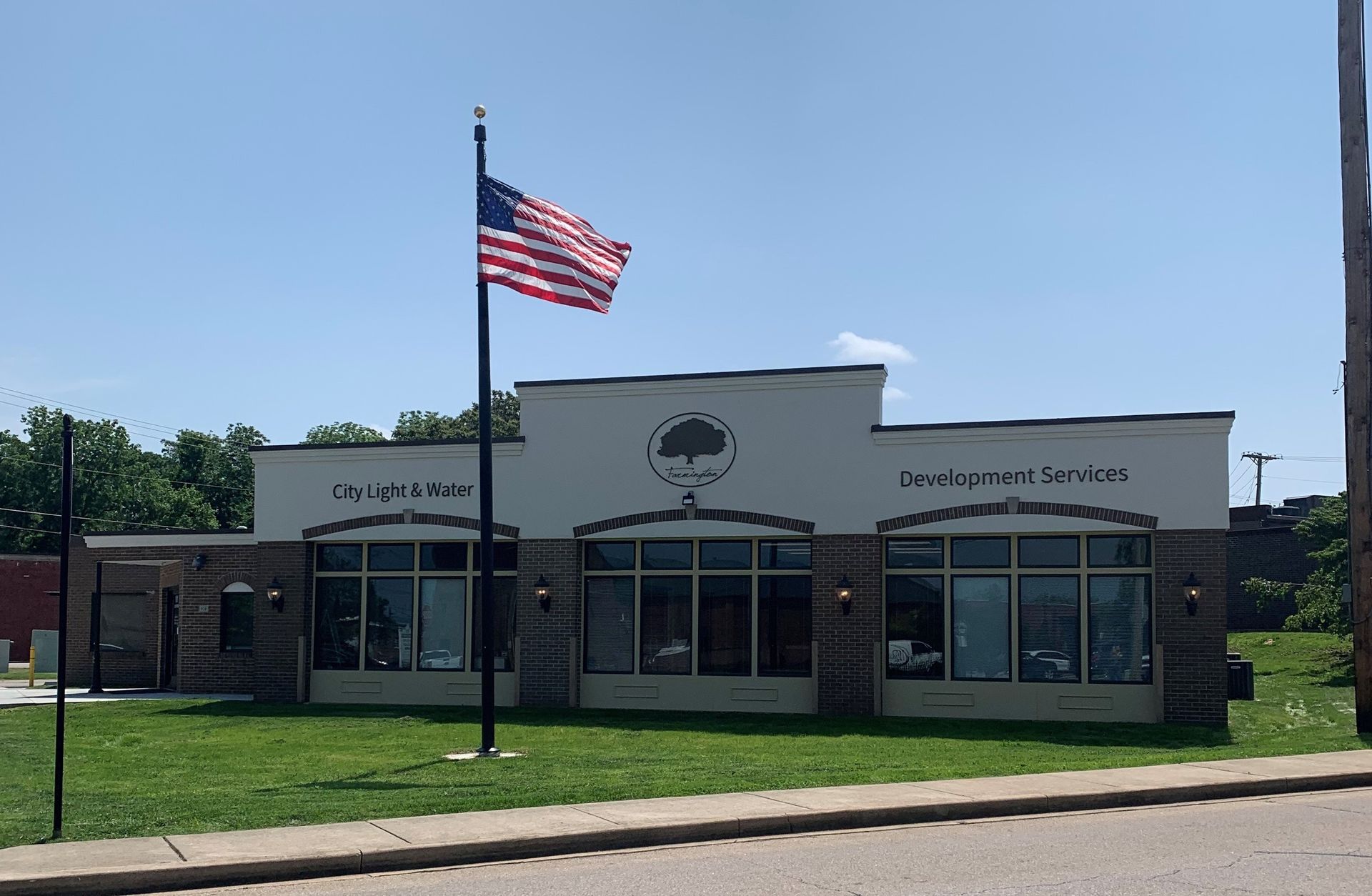
• Farmington City Light & Water/Development Services Office (101 S Jefferson St between 8:00am and 4:30pm)
• Farmington Public Library (101 N A St between 10:00am and 9:00pm)
• Farmington Civic Center (2 Black Knight Drive between 5:00am and 8:00pm)
The storm shelter at Truman Learning Center is scheduled to open at 3:30pm. For those considering sheltering at Truman Learning Center, you may follow the Farmington R-7 School District Facebook page for updates regarding the shelter. The shelter will not be open to the public prior to 3:30pm, as it is only available for students and staff during school hours.
Citizens should always utilize multiple information sources, including phones, television, and weather radios to receive warnings. Those in St. Francois County may go to www.farmington-mo.gov/smart911 to sign up for alerts.
Farmington Emergency Management Director Josh McAtee is alerting residents that the Bray Road storm siren is currently out of service and should not be relied upon today. “The siren’s panel is not working. A replacement panel has been ordered, but until repairs are completed, the siren will not sound”, said McAtee.
It is also important to remember that outdoor warning sirens will only sound in areas that are inside a storm-based warning polygon, which means the National Weather Service has a radar indicated or spotter confirmed tornado. Sirens are no longer activated for the entire county. This helps to diminish the tendency for people in high-risk tornado areas to downplay the significance of a warning. Countywide warnings are also no longer considered a best practice.
Farmington’s outdoor warning sirens are activated by a system called Rapid Warn. The system, which is in place at St. Francois County 911, monitors National Weather Service (NWS) warning polygons and uses the latitude / longitude of the polygon to know where to sound the sirens.
McAtee reminds residents to review their family’s emergency plan and follow these guidelines from the National Weather Service:
Emergency Plan:
• How will I receive emergency alerts and warnings?
• What is my shelter plan?
• What is my evacuation route?
• What is my family/household communication plan?
• Do I need to update my emergency preparedness kit?
In a house with a basement: Avoid windows. Get in the basement and under some kind of sturdy protection (heavy table or workbench) or cover yourself with a mattress or sleeping bag. Know where very heavy objects rest on the floor above (pianos, refrigerators, waterbeds, etc.) and do not go under them. They may fall down through a weakened floor and crush you. Head protection, such as a helmet, can boost survivability also.
In a house with no basement, a dorm, or an apartment: Avoid windows. Go to the lowest floor, small center room (like a bathroom or closet), under a stairwell, or in an interior hallway with no windows. Crouch as low as possible to the floor, facing down; and cover your head with your hands. A bathtub may offer a shell of partial protection. Even in an interior room, you should cover yourself with some sort of thick padding (mattress, blankets, etc.), to protect against falling debris in case the roof and ceiling fail. A helmet can offer some protection against head injury.
In an office building, hospital, or nursing home: Go directly to an enclosed, windowless area in the center of the building -- away from glass and on the lowest floor possible. Then, crouch down and cover your head. Interior stairwells are usually good places to take shelter, and if not crowded, allow you to get to a lower level quickly. Stay off the elevators; you could be trapped in them if the power is lost.
In a mobile home: Get out! Even if your home is tied down, it is not as safe as an underground shelter or permanent, sturdy building. Go to one of those shelters, or to a nearby permanent structure, using your tornado evacuation plan. Most tornadoes can destroy even tied-down mobile homes; and it is best not to play the low odds that yours will make it.
At school: Follow the drill! Go to the interior hall or windowless room in an orderly way as you are told. Crouch low, head down, and protect the back of your head with your arms. Stay away from windows and large open rooms like gyms and auditoriums.
In a car or truck: Vehicles are extremely risky in a tornado. There is no safe option when caught in a tornado in a car, just slightly less-dangerous ones. If the tornado is visible, far away, and the traffic is light, you may be able to drive out of its path by moving at right angles to the tornado. Seek shelter in a sturdy building, or underground if possible. If you are caught by extreme winds or flying debris, park the car as quickly and safely as possible -- out of the traffic lanes. Stay in the car with the seat belt on. Put your head down below the windows; cover your head with your hands and a blanket, coat, or other cushion if possible. If you can safely get noticeably lower than the level of the roadway, leave your car and lie in that area covering your head with your hands. Avoid seeking shelter under bridges, which can create deadly traffic hazards while offering little protection against flying debris.
In the open outdoors: If possible, seek shelter in a sturdy building. If not, lie flat and face down on low ground, protecting the back of your head with your arms. Get as far away from trees and cars as you can; they may be blown onto you in a tornado.
In a shopping mall or large store: Do not panic. Watch for others. Move as quickly as possible to an interior bathroom, storage room or other small-enclosed area, away from windows.
In a church or theater: Do not panic. Move quickly but orderly to an interior bathroom or hallway, away from windows. Crouch facedown and protect your head with your arms. If there is no time to do that, get under the seats or pews, protecting your head with your arms or hands.
For more information, please contact the Farmington Office of Emergency Management at 573.756.2324 or visit farmington-mo.gov/emergency-management.
Media Contacts
Joshua McAtee
Emergency Management Director
City of Farmington
Kristen White
Communications Director
City of Farmington